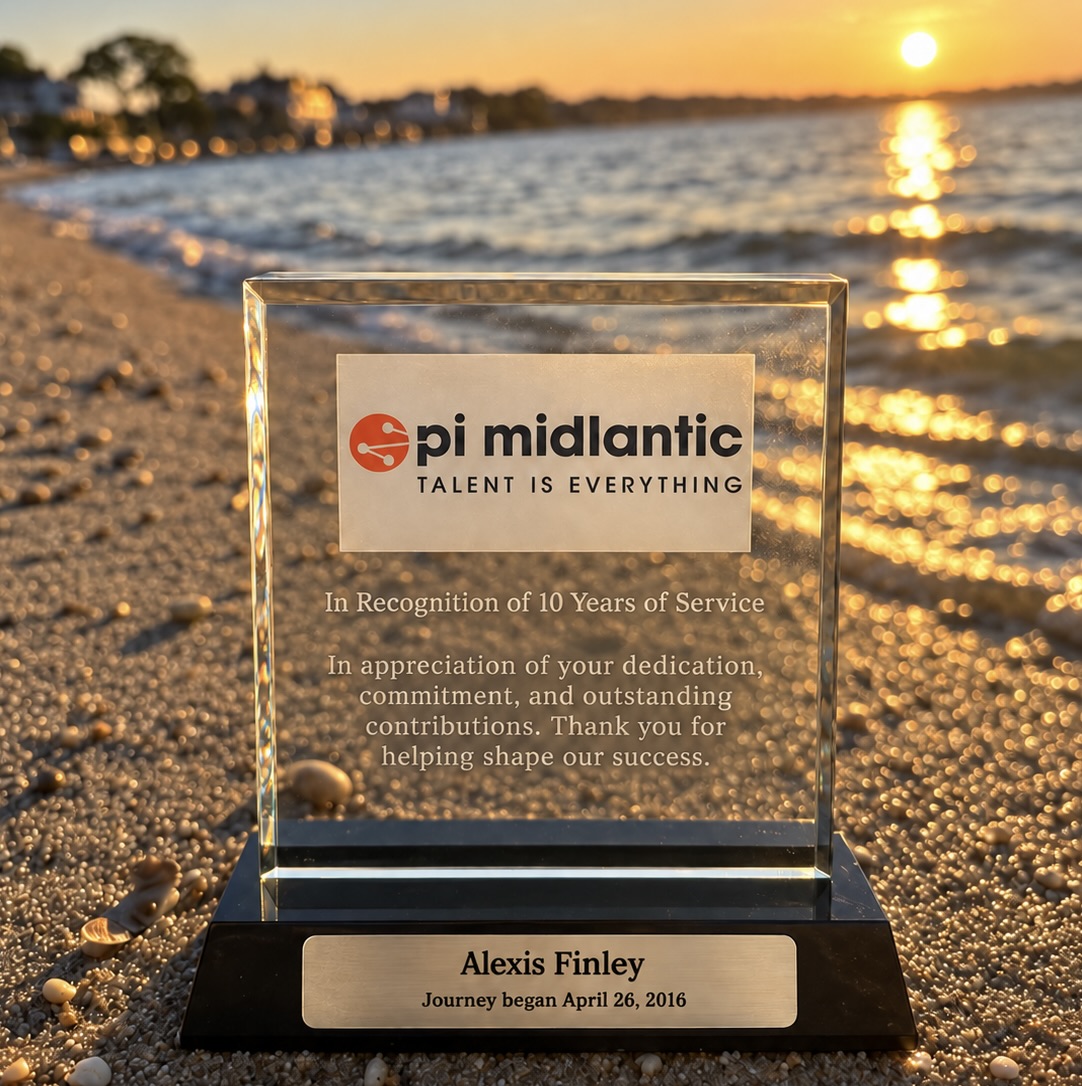
At our annual PI Midlantic meeting this September, I received an award recognizing my 10 years with the company.
Milestones like that have a way of making you look backward.
After 10 years with PI Midlantic and nearly 15 years working with The Predictive Index, I found myself thinking about what those years actually represent—the experiences, lessons, relationships, mistakes, growth, and, most importantly, the people who shaped the way I work today.
And my mind immediately went to Kathy Frank.
Long before I knew anything about The Predictive Index, Kathy was simply my “favorite customer” at my family’s restaurant. She would come in around 7 a.m. for coffee, one egg over with half a slice of cheese melted on top, and a side of sliced tomatoes. I knew her order. We talked. We got to know each other.
At the time, I had no idea those ordinary conversations between a waitress and her favorite customer would eventually change the trajectory of my career.
By then, Kathy had already built an extraordinary career of her own. She spent six years working with Arnold Daniels, the developer of The Predictive Index, and became the first woman PI consultant he hired. In 1996, she founded Augur Inc., became the first woman licensee of The Predictive Index, and went on to build a multi-million-dollar consulting practice.
Then, in 2012, Kathy took a chance on me.
I certainly did not have the experience or résumé that would have made me an obvious choice. In fact, one of my earliest experiences working with her involved helping clean and reorganize the basement of the Augur office—which, looking back, may have been one of the longest and most unconventional job interviews I have ever been on.
But Kathy saw something in me.
She gave me an opportunity, then another one, and another one. Over the years, I grew from an intern into the Talent Optimization Advisor I am today, and so much of that journey can be traced back to her mentorship.
Kathy became my teacher, my mentor, my sounding board, and one of the most important influences on my career. Almost 15 years later, I think I understand much more clearly what she actually gave me.
She certainly taught me how to read a PI graph, but the lessons that stayed with me were never really about the graph.
She taught me how she thinks.
And I think that is one of the most important things a great mentor gives us.
A mentor does not simply transfer knowledge; they help us develop judgment.
Knowledge can be taught in a class, read in a book, learned in a workshop, or increasingly found in seconds through technology and AI. Judgment develops differently. It comes from spending time around people who have done the work long enough to recognize things you do not yet know to look for.
You watch how they ask a question you never would have thought to ask. You see how they navigate an uncomfortable conversation or recognize something happening beneath the surface that you had completely missed. Eventually, you begin to understand not only what they are doing, but why they are doing it.
I believe that matters more now than ever.
We live in a time when information has never been easier to access. I can type a question into Google or ChatGPT and have an answer in seconds. Organizations have more technology, data, courses, assessments, and resources available to them than at any other point in my career.
Access to information is not the same thing as access to wisdom.
As information becomes easier to obtain, the ability to interpret it—to know what matters, what does not, what questions to ask, when to act, and how to apply what we know—becomes even more valuable.
Much of that will never appear in a training manual. It lives in people.
Mentorship is one of the ways we pass it on.
On April 26th 2016, Kathy sold the Augur Inc. book of business to PI Midlantic, and we stepped into the next chapter of our careers together.
I still have a picture of the two of us standing outside the Augur office on October 19, 2016, the final day in that office before we transitioned to working remotely.
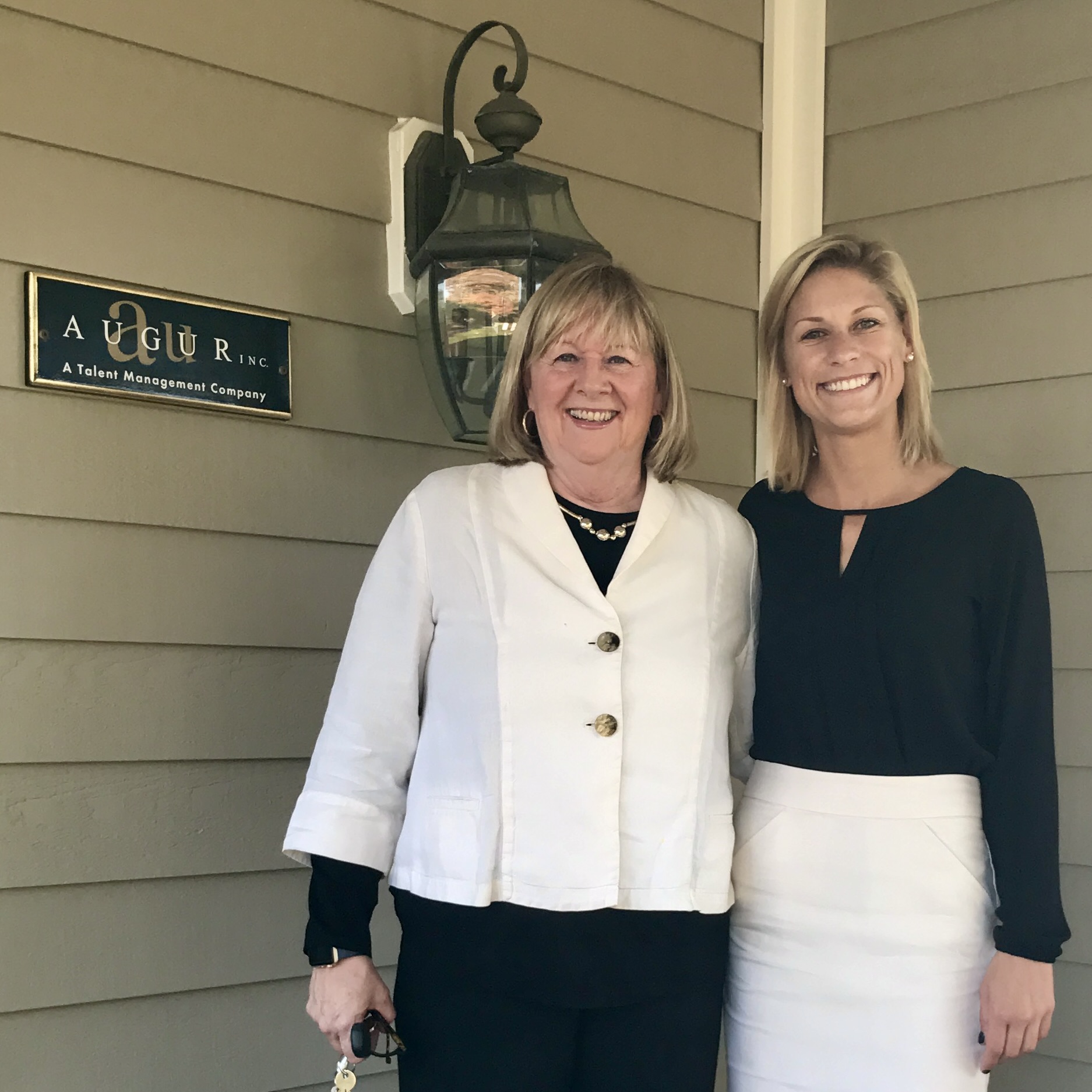
At the time, it was simply a picture marking the end of an era. Looking at it nearly ten years later, it means something entirely different. Now I can see how much of what came next had already been shaped by everything that happened before it.
There are still times when I am doing a PI readback and I hear Kathy’s voice come out of my mouth.
It might be a phrase she used, a question she would have asked, or a way she explained something to me years ago. I smile every time it happens because eventually the lessons of a great mentor stop feeling like lessons.
They become instincts.
They show up in how you think, how you solve problems, how you challenge someone, how you build relationships, and eventually, how you invest in other people.
That is where mentorship becomes bigger than one relationship.
Arnold Daniels shared what he knew with Kathy. Kathy shared what she knew with me. Those lessons now make their way into conversations I have with clients, colleagues, and people who may never have had the opportunity to know either of them.
And perhaps some of those people will carry pieces of those lessons forward too.
That is how knowledge becomes legacy.
So when I look at my 10-year award today, I do not really see ten years. I think about Kathy Frank and all of the conversations, lessons, opportunities, disagreements, encouragement, mistakes, and growth that happened in between.
My name may be on the 10-year award, but Kathy Frank’s fingerprints are all over the years it represents.
And perhaps that is the greatest legacy of mentorship: what someone teaches us does not end with us.
We carry it forward.